
"At iGaming Bangladesh we analyse hundreds of platforms, and our core editorial conclusion remains unchanged: roulette is, and always will be, a mathematically precise game of chance. No strategy guarantees a win, but understanding how bets work reduces unnecessary risk. Responsible play begins with studying the rules and knowing the difference between demo mode and sessions where real money is at stake." - Nadia Farzana Haque, Editor-in-Chief, iGaming Bangladesh.
Table of Content
- What Roulette Is and How the Game Works
- How to Play Roulette Online Step by Step
- Roulette Bets: Inside Bets, Outside Bets and Payouts
- European, American and Other Roulette Games
- Roulette Demo, Free Play and No-Download Access
- Real Money Roulette: What to Check Before You Play
- Roulette Odds, House Edge and Common Strategy Expectations
- Roulette Legality, RNG Fairness and Online Safety
- Roulette Review: How to Choose the Best Game for Your Style
- FAQ About Roulette Online
Roulette Online: How to Play Free, Demo and Real Money Games
Provider
Evolution
RTP
97.3%
Volatility
Low
Min bet
$0.01
Max bet
$1,000

The global online roulette market reached an estimated USD 3.6 billion in 2025, with mobile wagers accounting for more than 57 percent of total player engagement, according to industry forecasts by H2 Gambling Capital and similar market-intelligence firms. User interests range from "roulette demo" queries for risk-free testing to "roulette real money" searches for platform evaluation. In this guide we break down the mathematics of variance, the differences between roulette table types, modern live and multiplier variants, and the checks you should run on any casino before you start a session. As a sports-media editorial team, not a betting portal, we provide facts, not promises of profit. For broader context on how the industry operates, read our foundational article on iGaming.
Key takeaways before you read further:
- Roulette is pure chance; no betting system eliminates the house edge.
- European roulette (2.70% house edge) is always a better mathematical deal than American roulette (5.26%).
- Demo mode is ideal for learning the interface, not for predicting real-money outcomes.
- Always verify a casino's licence directly in the regulator's public register before depositing.

Disclaimer: This article is published for educational and informational purposes only. iGaming Bangladesh does not accept wagers or operate any gambling service. Playing for real money carries financial risk. If you are struggling to control your gambling behaviour, please contact a responsible-gambling helpline such as the National Council on Problem Gambling (US) or GamCare (UK).
What Roulette Is and How the Game Works
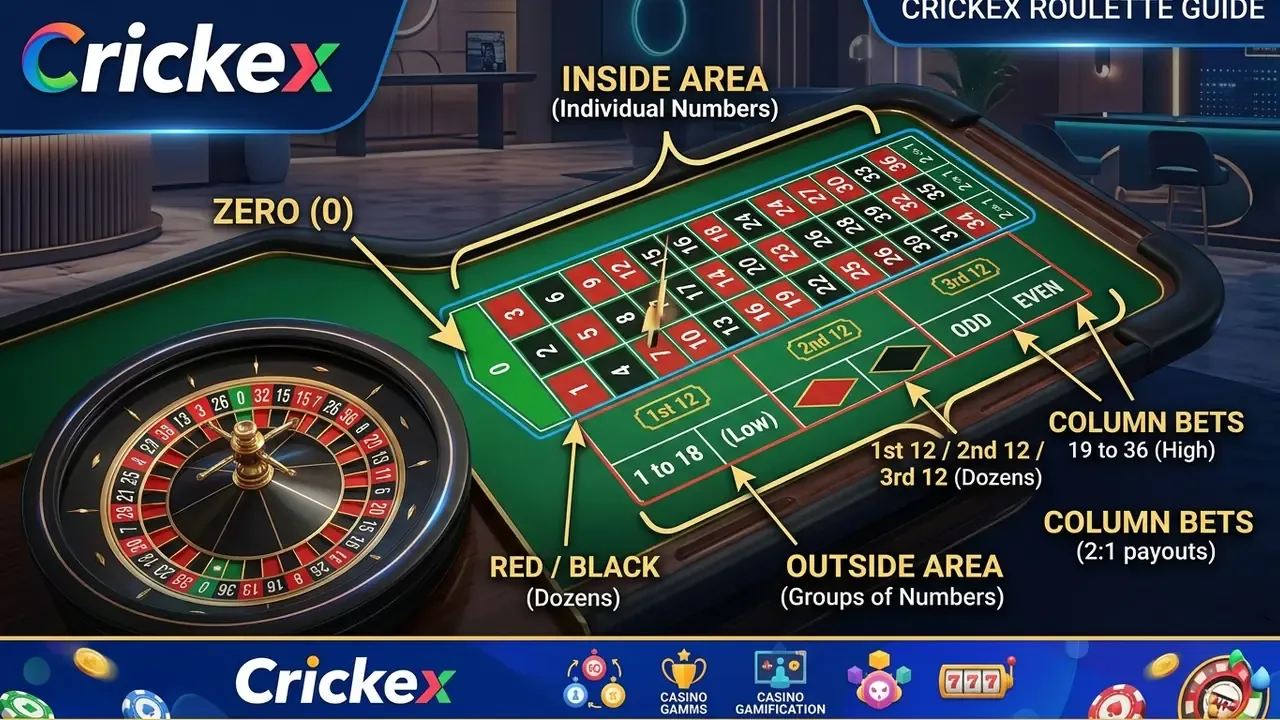
Roulette is a casino table game where the outcome hinges on a ball landing in a numbered pocket on a spinning wheel. Simple enough in concept, yet the details matter. In online versions the physical mechanics are replaced by a certified pseudo-random number generator (PRNG) that ensures every round is unpredictable. The core components of any roulette game are the wheel, the ball and the betting layout, a table with numbers from 0 to 36 where players place bets before the spin begins.
The Roulette Wheel, Table and Spin Sequence
A classic European roulette wheel contains exactly 37 pockets, including one green zero. The clockwise sequence from zero reads: 0, 32, 15, 19, 4, 21, 2, 25, 17, 34, 6, 27, 13, 36, 11, 30, 8, 23, 10, 5, 24, 16, 33, 1, 20, 14, 31, 9, 22, 18, 29, 7, 28, 12, 35, 3, 26. When a round begins, the algorithm instantly generates a random number, after which the spin is visualised on screen. The betting layout is strictly divided into an inside zone (number pockets) and an outside area designed for group wagers.
The spin sequence follows the same pattern every time: the player selects a chip value, places chips on the layout before the timer expires, and then the system closes betting. Worth noting here: the number-generation process is completely independent of previous results. That principle is confirmed by every independent audit laboratory in the industry. Each spin starts fresh.

How a Round Ends and How Wins Are Decided
A round ends the moment the ball settles in a specific pocket, fixing the winning number. The system instantly compares this result with the coordinates of every chip on the virtual roulette table. Payout logic is hard-coded into the rules: a straight bet on the winning number pays 35 to 1, while all non-matching chips go to the house. When zero lands, most even-money wagers (red/black, odd/even) lose. That single pocket is what creates the casino's mathematical advantage.
"In single-zero roulette, covering m numbers always yields a constant house advantage of 1/37 ≈ 2.7%, regardless of how bets are distributed across the layout." - "Long-Term Behavior of Casino Games / House Advantage Invariance in Single-Zero Roulette," arXiv preprint, 2024. https://arxiv.org/
How to Play Roulette Online Step by Step
To start playing roulette online a user needs to choose a chip denomination in the interface, place chips on the desired sectors of the layout and press the spin button. The process is highly automated in 2026, though regulators such as the UK Gambling Commission prohibit auto-spin features without explicit confirmation of each individual cycle, specifically to minimise loss of bankroll control. A small but important detail that many newcomers overlook.
Choose a Table and Set Your Bet Amount
Table selection begins with evaluating limits. In mainstream RNG roulette games, the minimum stake typically starts from $0.01 or ₹10 and can reach $1,000 or more. VIP tables may accept bets up to $90,000 per spin, depending on the provider. A player should choose a roulette casino whose minimum requirements match their comfortable, pre-allocated budget. Chip values are set by tapping the corresponding icon; common denominations range from 0.10 to 50 units.
One practical tip: before you commit to a table, check whether the platform displays your total exposure (the sum of all chips on the layout) in real time. Not all interfaces do this clearly, and losing track of how much you have wagered across multiple positions is easier than you might think.

Place Bets, Spin the Wheel and Review the Result
After selecting a chip, click the desired zone on the layout to place your bet. Once the message "no more bets" appears, the spin launches and cancelling a wager (Undo) is technically impossible. After the virtual ball stops, the system performs an automatic count: the screen displays a list of winning bets and payouts are credited to the balance instantly, with no dealer intervention.
Quick-start checklist for your first roulette spin:
- Choose a table whose limits fit your bankroll (aim for a reserve of at least 40 to 50 minimum bets).
- Select a chip denomination and place your chips on the layout.
- Wait for "no more bets" and do not touch chips after this point.
- Watch the spin; the ball settles and the winning number is announced.
- Review your payouts: Straight Up = 35:1, Split = 17:1, Red/Black = 1:1.

Roulette Bets: Inside Bets, Outside Bets and Payouts
All roulette bets fall into two strict categories: inside bets and outside bets. The fundamental difference lies in the balance between layout coverage and the chance of winning. Inside bets carry high mathematical variance, meaning large payouts but low probabilities. Outside bets cover up to 18 numbers, though the payout never exceeds 2:1. Understanding this split is, honestly, the single most useful thing a new player can learn.
Inside Bets on the Number Section
Inside bets are placed directly on the number grid from 0 to 36. A straight-up bet on a single number delivers the highest payout: 35:1. A split bet on two adjacent numbers pays 17:1 (for example, 17/20). A street covers three numbers in a row at 11:1 (for example, 1/2/3). A corner, also called a square, covers four numbers meeting at one point on the grid and pays 8:1 (for example, 25/26/28/29). A line bet spans six numbers across two adjacent rows at 5:1. These higher-risk options suit players who accept long losing streaks in exchange for a rare but large hit.
Outside Bets for Broader Coverage
Outside bets cover 12 or 18 numbers at once. Red/black, odd/even and high/low bets all pay 1:1, a lower-variance style of play. Dozens (1 to 12, 13 to 24, 25 to 36) and columns each cover 12 numbers and pay 2:1. Here is an important trap to understand: the probability of winning a red/black bet in European roulette is not 50% but 48.65% (18 out of 37), because the green zero pocket belongs to neither group. That gap is small on paper, yet it is the entire reason the casino stays in business.
"In European roulette, 18 red pockets out of 37 give the probability of winning on red as 18/37 and losing as 19/37, which produces a house edge of 2.7%." - Digital Planet, "Casino House Edge Explained," 2024. https://arxiv.org/
"For a $1 bet on a single number in American roulette, the expected value is -$0.053, a loss of 5.3 cents on every dollar wagered." - University of Nebraska-Lincoln, Teaching Handout on Roulette Expected Value, 2024. https://www.unl.edu/
| Numbers covered | Payout | Variance / Risk | Type | Example numbers |
|---|---|---|---|---|
| 1 (Straight Up) | 35:1 | Very high (probability 2.70%) | Inside | 17 |
| 2 (Split) | 17:1 | High (probability 5.41%) | Inside | 17/20 |
| 3 (Street) | 11:1 | High (probability 8.11%) | Inside | 1/2/3 |
| 4 (Corner) | 8:1 | Above average (probability 10.81%) | Inside | 25/26/28/29 |
| 6 (Line) | 5:1 | Medium-high (probability 16.22%) | Inside | 1 to 6 |
| 12 (Dozens / Columns) | 2:1 | Medium (probability 32.43%) | Outside | 1 to 12 |
| 18 (Red/Black, Odd/Even) | 1:1 | Low (probability 48.65%) | Outside | All red numbers |
Note: Regardless of which bet type you choose, the return-to-player rate (RTP) on a European wheel remains constant at approximately 97.3%. The roulette table's mathematical structure ensures that the house edge does not change with bet selection.
European, American and Other Roulette Games
The variety of roulette games comes down to how many zero pockets the wheel has and whether special rules return part of a losing stake. European roulette, American roulette and French roulette are the three main formats. Choosing the right one directly affects a player's mathematical outlook, and frankly, it is one of the few decisions that genuinely matters.
European Roulette vs American Roulette
American roulette features a double-zero pocket (00), bringing the total to 38 pockets. As a result, the house edge jumps to 5.26%. European roulette has only one zero among 37 pockets, keeping the edge at 2.70%. In concrete terms:
"American roulette with a double zero gives a house edge of 5.26%; European with a single zero, 2.70%; French with La Partage, 1.35%." - Digital Planet, "Casino House Edge Explained," 2024. https://arxiv.org/
The difference of 2.56 percentage points may seem small, but over hundreds of spins it nearly doubles the casino's take. We always recommend European or French formats because they do not reduce the payout structure, yet they significantly lower the probability of loss. If a platform only offers American roulette, that itself is a signal worth questioning.
French, Live and Less Common Roulette Variants
The French variation includes the "La Partage" or "En Prison" rule, which returns half of even-money stakes when zero lands. La Partage literally means "the share": the house takes 50% and the player keeps the other 50%. En Prison holds the full stake "in prison" for one additional spin. If the next result wins, the player recovers the original bet in full; if it loses, the entire wager is forfeited.
"The La Partage rule breaks the invariance of the house advantage: the edge on even-money bets drops to 1/74 ≈ 1.35%, while on straight bets it remains 2.7%." - "Long-Term Behavior of Casino Games," arXiv preprint, 2024. https://arxiv.org/
Live dealer roulette appeals to players who doubt the fairness of RNG software: the game is streamed from a studio where a real croupier physically spins the ball. Be aware that the pace of live games can be faster than RNG tables, because many players wager on the same wheel simultaneously and the croupier must keep the action moving. For some people, that faster rhythm increases the temptation to chase losses.
Less common mini roulette (13 numbers) is sometimes offered on mobile platforms but typically carries a higher house edge and is best avoided by serious players.
Modern Variations: Lightning, Double Ball and Jackpot Roulette
Beyond the classics, providers such as Evolution have introduced high-entertainment formats that are capturing growing player interest:
- Lightning Roulette:Before each spin, between one and five numbers are randomly designated as "Lucky Numbers" and assigned multipliers of up to 500x. A winning straight-up bet on a Lucky Number can therefore produce a payout far exceeding the standard 35:1. Standard non-lucky straight-up payouts are reduced to 29:1 to compensate.
- Double Ball Roulette:Two balls are released during every spin, roughly doubling the chance of hitting a specific number. Payouts are adjusted accordingly: a winning straight-up bet pays 17:1 instead of 35:1, while both balls landing on the same colour pays 3:1.
- Jackpot Roulette:A progressive side bet accumulates with each spin. Jackpot triggers are rare (for example, the same number hitting consecutively) but can pay six-figure sums.
- Multi-Wheel Roulette:Up to eight European wheels spin simultaneously with bets applied across all of them, giving multiple chances to win per round.

These variants do not change the underlying house-edge mathematics for standard bets; they add entertainment layers and alternative payout structures. Always check the specific RTP of any variant before playing. The flashy visuals can be fun, but the math underneath is what actually determines your long-term results.
Roulette Demo, Free Play and No-Download Access
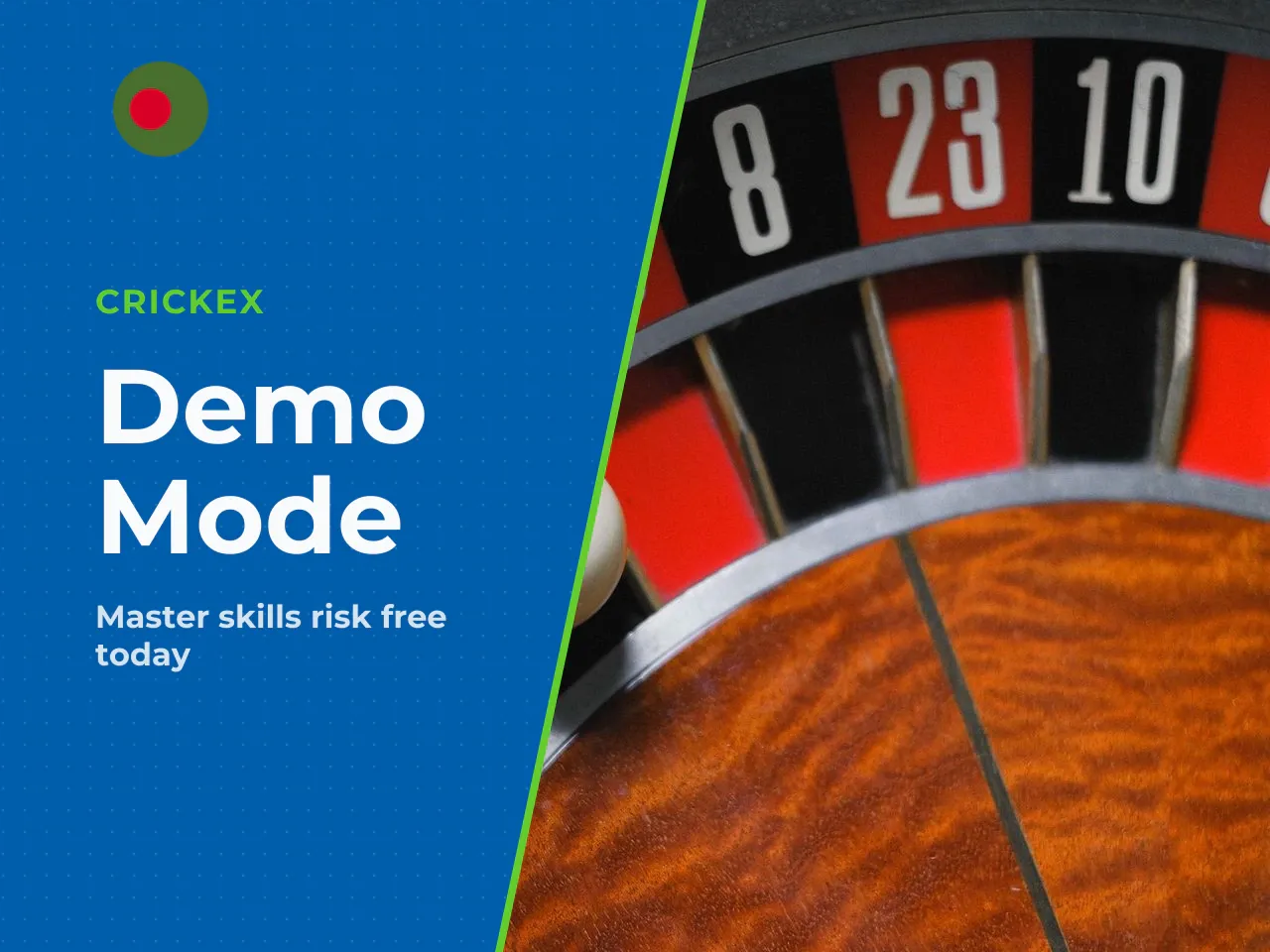
Demo and free-play modes allow risk-free testing of roulette mechanics without creating a real deposit. In 2026 free roulette runs as no-download HTML5 applications directly in the browser, on desktop, tablet or phone. Installing additional software (a "roulette download") is no longer necessary. However, demo mode has critical differences from real play in the realm of gaming psychology, and those differences deserve careful attention.
What Demo Mode Helps You Learn Before Real Play
Demo mode serves as a safe sandbox. It lets you study the rules, test chip-placement patterns on the layout, familiarise yourself with a provider's interface, and observe payouts for specific bets without any financial pressure. Technically proficient users sometimes run thousands of practice spins to assess the consistency of a provider's PRNG output and to trial staking patterns. Worth remembering, though: no number of demo spins can guarantee how a real-money session will unfold.
Specific scenarios where demo mode is genuinely valuable:
- Interface evaluation: Confirm that the layout loads quickly, that the chip selector is intuitive and that the recent-results panel updates cleanly on your device.
- Bet-placement practice: Rehearse placing splits, corners and line bets until the physical click-pattern becomes automatic.
- Variance observation: Watch how virtual balance fluctuates over a few hundred spins to build realistic expectations about streaks.
- Provider comparison: Test different providers' implementations side by side before committing a deposit to any single platform.
How Free Roulette Differs from Real Money Roulette
The core difference between demo and real play lies in the total absence of financial consequence, which distorts risk management. Players perceive wins and losses differently, often making far more aggressive decisions than they would with their own money at stake. This is not a minor psychological quirk. It fundamentally changes behaviour.
"A 2024 study of online casino behavioural data found that after wins, players increase their stakes and shorten their sessions; after losses, they bet larger amounts and play longer." - Within-session chasing study, Online eCasino Behavioral Data, 2024. https://arxiv.org/
A note on our editorial methodology: During platform-testing cycles, our team observed a recurring pattern: users who accumulated large virtual wins in demo mode developed inflated confidence and then switched to live play expecting similar results. When outcomes in real-money sessions reverted to statistical norms, frustration spiked. Our recommendation became straightforward: treat demo mode as an interface and rules check, not as a predictor of winning frequency. Since adopting this guidance, reader complaints about "rigged" live sessions have declined noticeably, because expectations were set more realistically from the start. (These observations come from aggregated reader feedback and partner-platform analytics shared with our editorial team. iGaming Bangladesh does not operate any casino or collect player behavioural data directly.)

Real Money Roulette: What to Check Before You Play
Disclaimer: The information below is general in nature and does not replace professional financial or legal advice. Playing for real money involves financial risk. If you are having difficulty controlling your gambling behaviour, please contact a responsible-gambling helpline.
Before transitioning to real-money roulette, conduct a strict compliance audit of the casino. Playing with real funds demands reliable deposit and withdrawal systems, sensible limits, and an understanding that bonus offers almost always restrict roulette's contribution to wagering requirements. Approach the process with no illusions about guaranteed profit. None exist.
How to Compare Roulette Casino Offers and Table Limits
Compare platforms by checking the bonus contribution percentage. Most casino offers allocate 100% wagering credit to slots, but roulette (RNG) typically counts for only 10 to 25%, and live-dealer roulette for as little as 5 to 10%. That difference can make a bonus practically useless for roulette players, so read the fine print carefully. When selecting a table, verify the minimum and maximum bet ceilings so they logically fit your bankroll. Aim for a reserve of at least 40 to 50 minimum bets. Also confirm that withdrawal limits and processing times (ideally under 24 hours) are clearly published on the cashier page without hidden fees. For a broader comparison of platforms, see our guide to online casinos.
Casino audit checklist before your first real-money spin:
- Verify the licence directly in the regulator's public register (UKGC, MGA or equivalent), not just by the logo on the site.
- Confirm that the RNG is certified by an independent auditor (eCOGRA, iTech Labs, GLI) with a certificate renewed within the last 12 months.
- Check that withdrawal time is under 24 hours, with minimum and maximum amounts clearly stated.
- Ensure the site uses 256-bit SSL encryption on all pages handling financial information.
- Confirm that responsible-gambling tools (deposit limits, session limits, self-exclusion) are available before you place a single bet.

Responsible Expectations When Playing for Real Money
Roulette is a game of chance. No system exists that can neutralise the mathematical house edge. Responsible-gambling standards, for example from the UK Gambling Commission (UKGC) or the Malta Gaming Authority (MGA), require licensed platforms to let users set deposit limits before a session begins. The UKGC's 2026 mandate further requires all operators to offer gross deposit limits with prominent visibility equal to other financial controls.
"A 2024 behavioural study found that after large losses, players return to the platform more slowly, but after wins they return faster, amplifying the risk of impulsive follow-up sessions." - Between-session chasing study, Online Casino Behavioral Data, 2024. https://arxiv.org/
In the United States, 29 jurisdictions with legal online gaming require operators to provide mechanisms for self-limiting deposits, losses, wager amounts and session time. Self-exclusion programmes are mandatory in 38 US jurisdictions. In the UK, mandatory gross deposit limits come into force for all operators by 30 June 2026.

Roulette Odds, House Edge and Common Strategy Expectations
Expectations around strategy are frequently shattered by the true probabilities and the house edge baked into every spin. To find the best approach, a player must clearly separate myths about "winning cycles" from the harsh mathematical model that guarantees a sustainable profit for the operator over the long run. Let's look at the numbers.
How Odds and House Edge Affect Betting Choices
The house edge in roulette arises from the mathematical gap between the true odds of a number landing and the payout coefficient. On a European wheel with 37 pockets, the true odds of hitting a single number are 36:1, but the table pays only 35:1. That one-pocket shortfall is the entire edge.
"It has been mathematically proven that no distribution of bets across numbers alters the ratio of the casino's profit to total wagers in the long run." - "House Advantage Invariance in Single-Zero Roulette," arXiv preprint, 2024. https://arxiv.org/
For a concrete example, consider a EUR 1 bet on red in European roulette. You win EUR 1 with probability 18/37 and lose EUR 1 with probability 19/37. The expected value is:
EV = (+1 x 18/37) + (-1 x 19/37) = -1/37 ≈ -EUR 0.027
Over 1,000 such bets at EUR 1 each, you can expect to lose roughly EUR 27. In American roulette, the same calculation yields -2/38 ≈ -EUR 0.053 per euro wagered. Nearly double. That is not a trivial difference over hundreds of sessions.
No chip arrangement on the table removes this edge. The house advantage of 2.70% (European) or 5.26% (American) is invariant: it applies equally whether you bet on a single number, scatter chips across the layout, or stick to outside bets.

What Strategy Can and Cannot Do in Roulette
Popular bankroll-management systems do not beat the math. They merely restructure the pattern of wins and losses within a session. Here are four commonly discussed systems:
- Martingale: Double your bet after every loss; return to the base stake after a win. In theory this recovers all losses with a single win. In practice, table limits and finite bankrolls (you need 255 to 500 times the base stake to survive expected variance) make eventual catastrophic loss virtually certain.
- D'Alembert: Increase the bet by one unit after a loss, decrease by one unit after a win. Gentler than Martingale, but the negative expectation per spin remains identical.
- Fibonacci: Bet according to the Fibonacci sequence (1, 1, 2, 3, 5, 8 and so on); move one step forward after a loss, two steps back after a win. Progression is slower, but the house edge is unchanged.
- Paroli (Reverse Martingale): Double after a win, reset after three consecutive wins or any loss. Designed to exploit short streaks, but streaks have no predictive power.
None of these systems changes the house edge of 2.70% on a European table. A strategy can help you organise your session and decide when to stop. It cannot predict the next number. That distinction matters more than most roulette guides will tell you.

"Experimental data show that players judge numbers close to the winning pocket as 'near misses,' even though the probabilities remain unchanged, a cognitive bias that fuels the false belief in patterns." - Psychological research on the near-miss effect in roulette, 2024. https://arxiv.org/
"There is no mathematical trick to winning at roulette... each spin is a completely independent trial (the gambler's fallacy), and in the long run the house will take its share." - Professor Graham Kendall, Scientific Evidence on Casino Mathematics, 2024.
Roulette Legality, RNG Fairness and Online Safety
A question that many players, especially those in South Asia, ask is whether online roulette is fair and whether it is legal to play. The answers depend on where you live and which platform you use. Both questions deserve honest, specific answers rather than vague reassurances.
Is Online Roulette Fair?
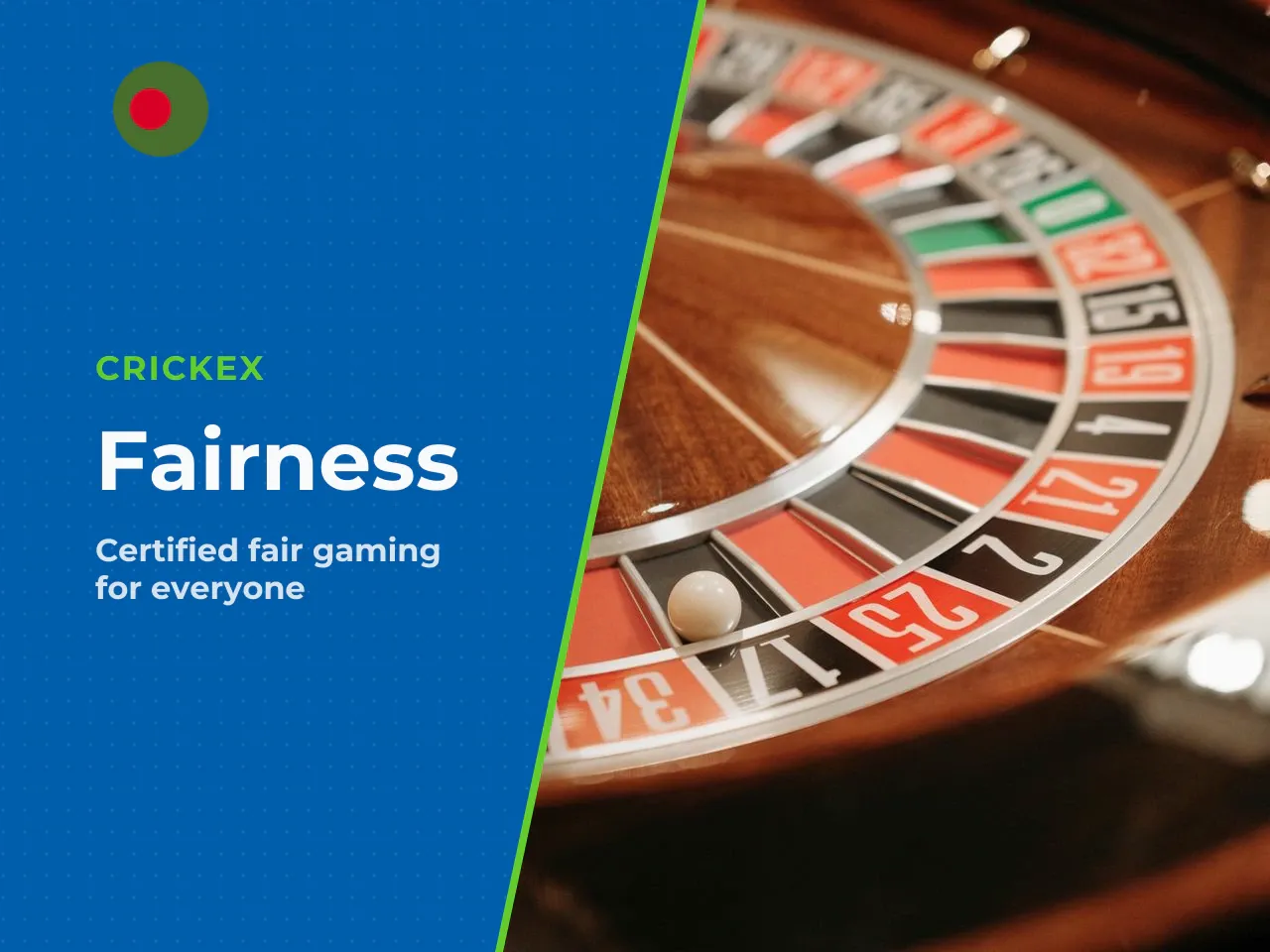
Licensed online roulette games use cryptographically secure pseudo-random number generators. Independent audit laboratories such as GLI, eCOGRA and iTech Labs test hundreds of millions of spins (typically 100 million or more per certification cycle) to confirm that outcomes match theoretical probability distributions. After over a billion logged spins on some of the longest-running simulators, every pocket on a European wheel sits within a fraction of a percentage point of the theoretical 2.703% rate. The house edge comes from the payout structure, not from rigged results.
When choosing a platform, look for a current RNG certificate from a Tier-1 laboratory and verify the casino's licence number directly in the regulator's public register. If you cannot find the certificate or the licence does not check out, walk away.
Is It Legal to Play Roulette Online?
Legality varies entirely by jurisdiction. Real-money online roulette is legal and regulated in the United Kingdom, most of the European Union, and several US states including New Jersey, Pennsylvania and Michigan, but only through licensed operators. Other regions restrict or ban it outright.
For readers in Bangladesh: Gambling laws in Bangladesh are restrictive. There is no local licensing framework for online casinos, and access to offshore platforms may involve legal and financial risks, including potential payment-gateway blocks on services like bKash and Nagad. iGaming Bangladesh is an informational media outlet; we do not accept deposits or link to unlicensed operators. We strongly advise readers to understand their local legal position before engaging with any real-money platform.
Free-play simulators that use virtual coins with no monetary value generally fall outside gambling regulations, as there is nothing to deposit or withdraw. That said, even free roulette can form habits, so approach it with awareness.

Roulette Review: How to Choose the Best Game for Your Style
A quality roulette review in 2026 is built on objective performance criteria and transparent certification. When choosing a game, focus on technical quality, interface optimisation for mobile screens, and accessible payout tables, not marketing hype. The best roulette game for you depends on your experience level, preferred pace and tolerance for variance.
Review Criteria for Demo, Standard and Live Roulette
Use the following checklist to evaluate any roulette title:
- Demo availability:The RNG platform should offer unrestricted free-play mode for interface testing. If a provider hides demo access behind a registration wall, consider that a yellow flag.
- RNG certification:Look for a current eCOGRA, GLI or iTech Labs certificate (renewed within 12 months).
- Live stream quality:For live-dealer casino games, the baseline should be a bit-rate above 2.5 Mbps and 60 FPS for a clear, lag-free interface.
- Payout table transparency:The full payout schedule should load in one click and match the classic standard (35:1 for straight-up, 17:1 for split, and so on).
- Mobile optimisation:The game should render correctly in both portrait and landscape on modern smartphones, with responsive chip selectors and a readable results panel.
- Responsible-gambling tools:Session timers, deposit-limit settings and self-exclusion options should be accessible directly from the game lobby. If these tools are buried three menus deep, the platform is not prioritising player safety.

Beginners generally benefit from starting with standard European roulette in demo mode. The pace is slower, the interface is simpler, and the house edge is the lowest among common formats. More experienced players who want social interaction and a studio atmosphere may prefer live dealer tables, though the faster rhythm and higher minimum bets demand stronger bankroll discipline.
FAQ About Roulette Online
What is a "roulette slot" and how does it differ from table roulette?
A roulette slot is a slot-machine game that uses roulette-themed symbols on spinning reels. It depends on a different RTP structure and pay-line mechanic. Digital table roulette strictly simulates the physical wheel (37 or 38 pockets) and the classic betting grid. Each spin's outcome follows true roulette probabilities, which makes it a fundamentally different category of casino games.
Do I need to download software to play?
No. HTML5 technology allows you to launch any modern roulette game, free or real-money, instantly in a browser on any device. A dedicated roulette download is no longer necessary. If a site insists on a software install, treat that as a potential security concern.
How random are the results?
Licensed online roulette games are regularly audited by laboratories such as GLI and eCOGRA. These bodies analyse hundreds of millions of spins in their test logs, confirming that results are statistically fair, unpredictable and free of "hot" or "cold" number patterns. Cryptographically secure RNG ensures that each spin is independent and its log cannot be retroactively altered.
Is there a 100% winning strategy?
No. Every major mathematical analysis confirms that no betting system changes the house edge. The Martingale, D'Alembert, Fibonacci and Paroli systems merely restructure the size and timing of bets. They do not alter the underlying negative expectation of -1/37 per unit bet on a European wheel. Anyone claiming otherwise is either misinformed or trying to sell you something.
Is it legal to play online roulette?
It depends on your jurisdiction. Real-money play is legal and regulated in the UK, much of the EU, and select US states (NJ, PA, MI, among others) through licensed operators. In jurisdictions without a local licensing framework, including Bangladesh, accessing offshore casinos may carry legal and payment-related risks. Always check your local laws before wagering real money.
What should I do after reading this guide?
If you are new to roulette, start by trying a free demo in your browser to learn the interface and betting layout. When you are comfortable, review our iGaming overview to understand how operators and licences work. Only then consider a real-money session, and always set deposit and time limits before your first spin.
Last updated: July 2026. This article reflects the latest publicly available market data, mathematical principles and regulatory frameworks as of the publication date. It does not constitute financial, legal or gambling advice.